- Rice Fish Miso Soup
- Posts
- Yoshimasa and the Silver Pavilion: Japan's Forgotten Cultural Renaissance
Yoshimasa and the Silver Pavilion: Japan's Forgotten Cultural Renaissance
Unveiling the Artistic Legacy of Ashikaga Yoshimasa in the Higashiyama Era

Shu T
September 18, 2023

Tea ceremonies, ink paintings, Japanese gardens, ikebana, renga haikai, tatami mats, tokonoma alcoves, shoji screens...
The establishment of the cultures that symbolize Japan to this day concentrated in a brief period known as the 'Higashiyama Era' in the late 15th century. Just like the Renaissance in Western Europe, Japan also had its golden age of culture.
In the case of the Renaissance, patrons like the Medici family were at the center of its prosperity. In Japan, it was the political leader of the time, Shogun Ashikaga Yoshimasa.
Yoshimasa's contribution to the arts goes beyond mere patronage. He used his position and wealth generously to pursue his hobbies, allowing the arts to flourish. During his time, Japan was in turmoil, with 11 years of warfare that devastated the capital, Kyoto. His political standing suffered due to his indulgence in hobbies during this turbulent period.
However, in terms of culture, it's safe to say that the roots of today's Japanese culture began with his personal interests. The centerpiece of the Higashiyama culture is Jishoji, commonly known as the 'Ginkaku-ji' or the 'Silver Pavilion,' which was Yoshimasa's residence and a gathering place for artists. It was a stage where various forms of culture converged.
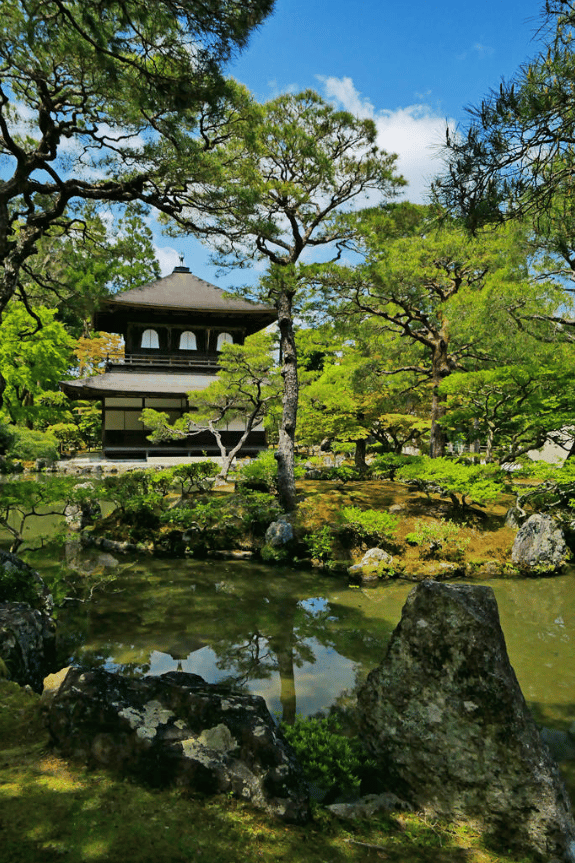
銀閣寺(Ginkaku-ji)
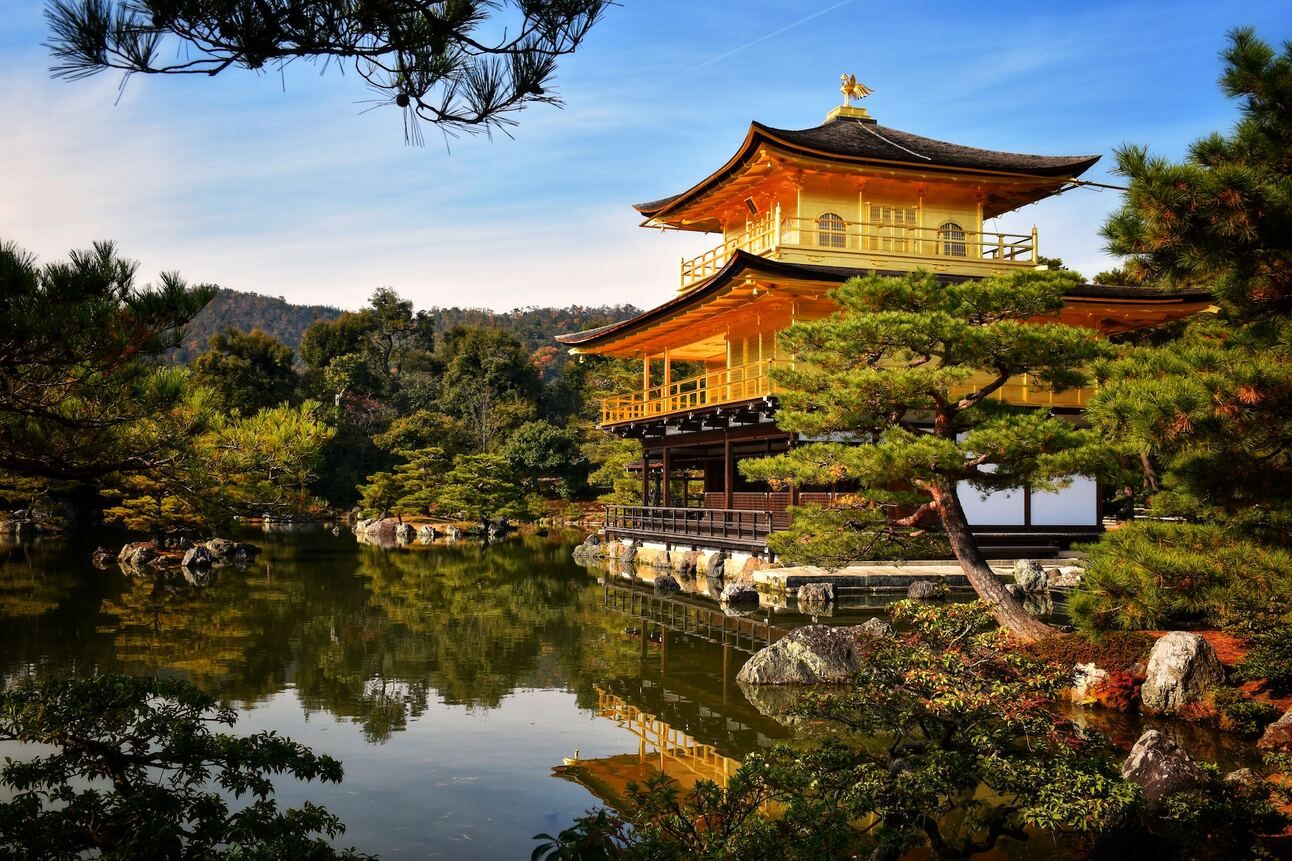
金閣寺(Kinkaku-ji)
Compared to the 'Kinkaku-ji' or the 'Golden Pavilion' built by Yoshimasa's grandfather, Ashikaga Yoshimitsu, the 'Silver Pavilion' may seem modest in appearance despite its name. It might lack the overt tourist appeal of grandeur. However, for those who have studied the history of Japanese culture, visiting this place can be an incredibly stimulating experience.
Just as those well-versed in film contexts highly regard the movies of Akira Kurosawa, there, you can discover traces of cultural inventions that were previously unimaginable. For instance, the prototype of the traditional Japanese tatami-matted room was born here. The method of covering floors with tatami, dividing small rooms with sliding paper doors (fusuma and shoji), serves as the root of today's Japanese-style rooms. It's also considered the origin of the four-and-a-half tatami mat-sized tea rooms.

Room 'Dōjin-sai' - Opening the shoji screens and framing the borrowed landscape of the garden like a hanging scroll.
Yoshimasa, a seeker of beauty, enjoyed tea, incense, floral arrangements, and interacted with common townspeople who excelled in culture and the arts within this confined space. The results of these interactions consistently manifested into timeless aesthetic styles, making it impossible to overlook the distinctiveness of Yoshimasa's existence and the enigmatic nature of the magnetic field this space produced.

For those who wish to delve deeper, I recommend reading the work of Donald Keene, a former professor at Columbia University, titled 'Yoshimasa And the Silver Pavilion'. Despite being an American, Keene possessed unparalleled knowledge of Japanese culture and was a foremost authority who highly appreciated Yoshimasa's cultural contributions. If you aspire to study Japanese culture more extensively, his work will serve as an invaluable guide.
Reply