- Rice Fish Miso Soup
- Posts
- In Praise of Shadows
In Praise of Shadows
Rediscovering Beauty: A New Perspective in the Shadows

Shu T
September 12, 2023

Living in the modern world, we often forget that once the world was shrouded in more darkness.
There's a book called 'In Praise of Shadows,' published in 1933. The author is Jun'ichirō Tanizaki, a renowned Japanese writer known for his aestheticism. Although it's a short book of about 50 pages, the arguments within it provide essential insights for us today.
Tanizaki asserts that there was a beauty in shadows in this country in the past. And that this world of shadows was illuminated by American-style electric lights brought with modernization, causing it to be lost.
Here, 'shadows' do not merely mean the absence of light. They refer to a world within darkness, with gradations, created by deep darkness and faint light.
Tanizaki asks, 'Have you ever seen the color of darkness illuminated by light'? He describes it as 'particles resembling fine ash, each one gleaming with a rainbow-colored brilliance.'
Recently, with the trend of Japandi style, Isamu Noguchi's 'akari' lighting, a modern reinterpretation of traditional Japanese lighting, has garnered attention. This too is an expression of the aesthetic sense of the world of shadows.

'akari' by Isamu Noguchi
In fact, traditional Japanese architecture prefers dim lighting. Rather than direct sunlight pouring in through windows, it seeks indirect, gentle light.
This can be observed in elements that still exist in modern architecture, such as shoji screens, engawa (verandas), and eaves.


From lamps to gaslights, and from gaslights to electric lights, the West has continually pursued brightness and progress. In contrast, Japan accepted the scarcity of light, dove into the depths of darkness, and discovered beauty within it.
Tanizaki cites 'lacquerware' as an example of the beauty of shadows. While lacquerware may not be highly valued in modern times, its true charm can only be felt in the dim light.

He notes,
'At first glance, the elaborate decorations of maki-e appear garish. But when you paint the surroundings with black ink, place them in the dark, and light a single candle, they sink deep, becoming subdued and weighty. When the ancient craftsmen applied lacquer and created maki-e on these items, they surely had in mind the effects they would achieve in the dim light.'
Furthermore, Tanizaki finds the beauty of shadows in food.
In Japan, for a long time, one of the most representative gifts has been Yokan, a traditional Japanese sweets.
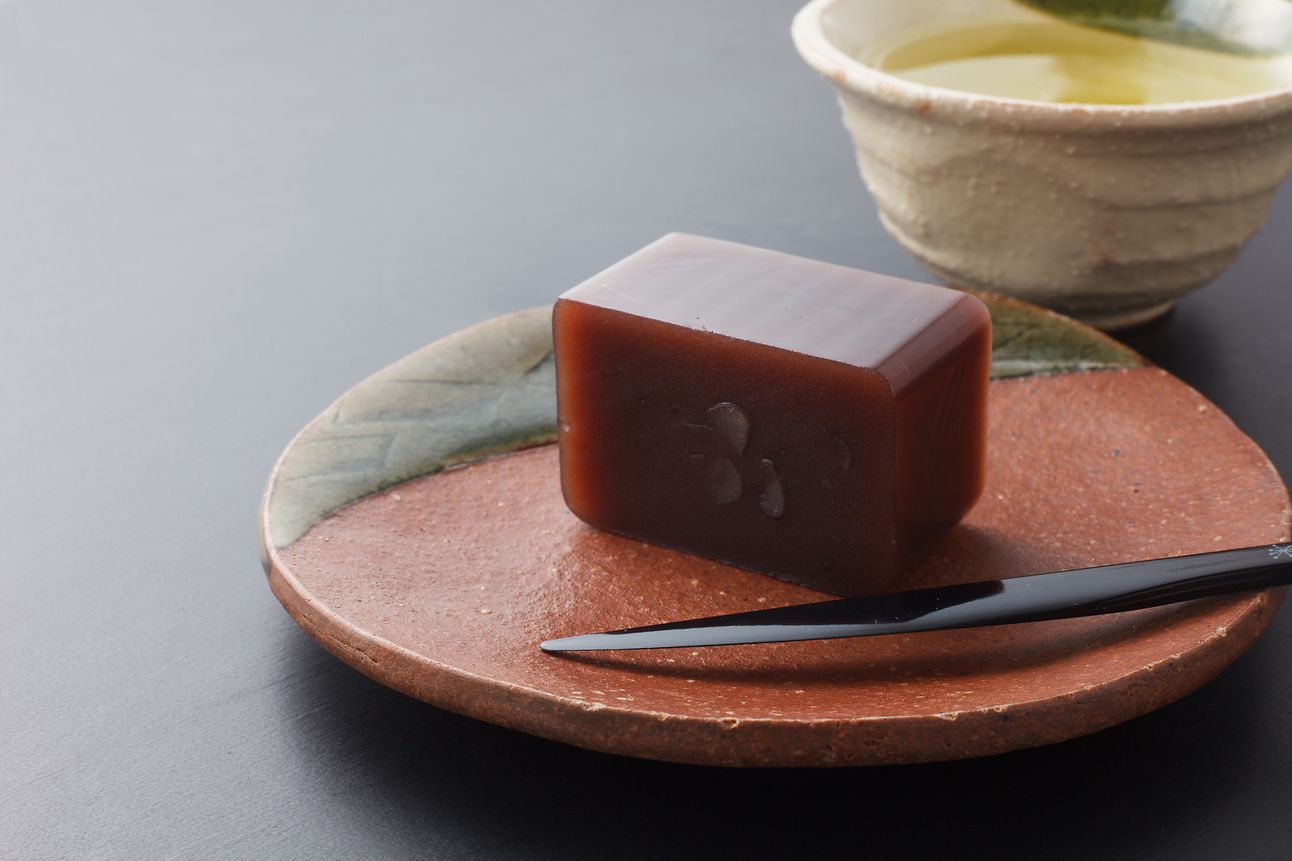
Tanizaki describes the colors of Yokan as 'meditative.'
'The skin, like a translucent gem, draws sunlight deep into its core, creating a dream-like brightness. The depth and complexity of those colors. When you place them in a dark room and submerge them in darkness where you can barely distinguish their skin color, it becomes even more meditative. When you put that cold, smooth object in your mouth, it's as if the darkness in the room melts on your tongue, and even a not particularly delicious piece of Yokan seems to acquire an unusual depth of flavor.'
Indeed, it's quite a contrast to the image of a cake topped with whipped cream on white plate, and the term 'meditative' resonates well.

Modernism and post-modernism have been histories of progress and brightness, but today, Japan society has reached an impasse, unable to find sufficient hope beyond.
In that case, why not push what's too visible into the darkness, and peer into the shadows? Perhaps we might discover unseen beauty that still exists in the world.
First, try turning off the electric light and see.
Reply