- Rice Fish Miso Soup
- Posts
- Izumo Taisha: Unveiling the Ancient Mystery
Izumo Taisha: Unveiling the Ancient Mystery
Exploring the Enigmatic Origins of Japan's Matchmaking Shrine

Shu T
September 22, 2023

Izumo Taisha
The most important shrine in Japan is undoubtedly Ise Grand Shrine, but rivaling its history and drawing nationwide popularity for its power in "matchmaking" is Izumo Taisha in Shimane Prefecture.
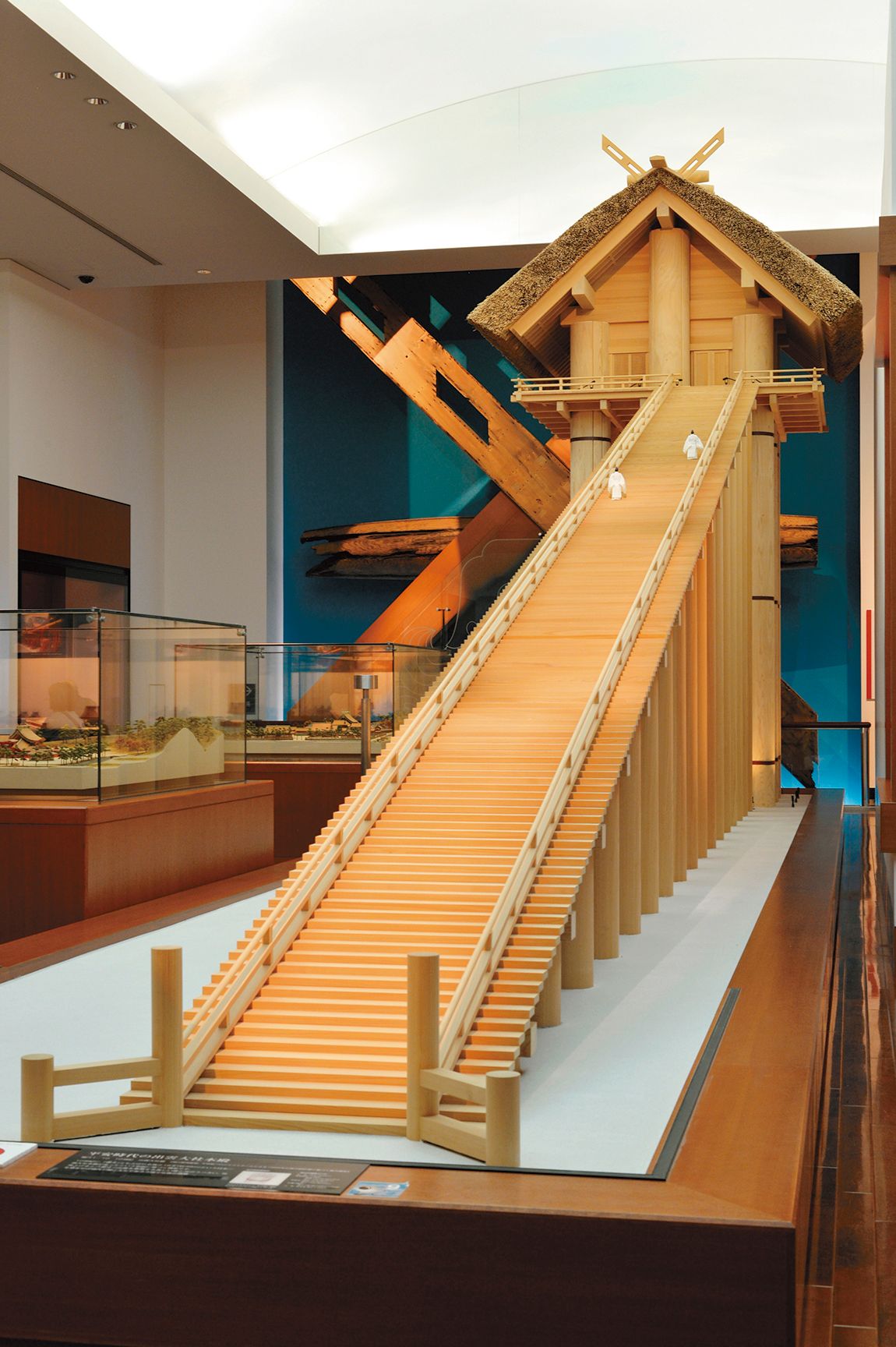
The origins of this shrine have been the subject of research for many years, yet the precise details remain elusive. What seems certain is that in this location, there once stood an ancient temple of extraordinary size, surpassing conventional wisdom. According to tradition, this temple's height was said to be 48 meters, double the size of the present shrine built in 1774, and it featured colossal pillars with a diameter of 3 meters.

Reconstruction Image of the Ancient Izumo Grand Shrine
In reality, in the year 2000, three pairs of massive cedar trees were unearthed on the grounds of Izumo Taisha, aligning with the descriptions of the ancient temple. When these trees are grouped together, they indeed measure about 3 meters in diameter, reinforcing the possibility that they supported the roof of the former Izumo Taisha.

According to simulations conducted by a major construction company, if one were to attempt to reconstruct this ancient shrine in modern times, it would require a total construction period of 6 years and a workforce of 126,700 people. The estimated total cost for the project, considering contemporary labor conditions, stands at 12.186 billion yen. It is evident that it was indeed a monumental project constructed during ancient times.
The oldest surviving chronicles of Japan, the "Kojiki" and the "Nihon Shoki," compiled in the 8th century, contain a myth related to Izumo Taisha known as the "transfer of land." According to this myth, representatives of the sun goddess, "Amaterasu Omikami" (believed to be the ancestor of the Japanese imperial family, which includes the Emperor), visited the god responsible for creating Japan's land, "Okuninushi no Okami," at Izumo Taisha. They requested the transfer of land, and in exchange, Okuninushi no Okami stipulated that a magnificent shrine be constructed to match the dignity of the Emperor.
Whether this account is considered entirely fictional or partly rooted in historical events remains a subject of debate. As exemplified by discoveries at the ancient Troy site, myths often contain elements of truth. If we entertain the possibility that there is a connection to historical events, it suggests the existence of a significant power in Izumo that once reigned over the region and willingly relinquished control to Japan's initial imperial family.
Supporting this theory, in 1984, a total of 358 bronze swords were excavated from Izumo's archaeological sites. This quantity alone exceeded the total number of bronze swords previously found across the entire country and sent shockwaves through the field of archaeology. According to the prevailing modern interpretation, the presence of a significant entity, comparable to the ancient Izumo Kingdom, is highly likely.

Bronze Swords on Display at the Ancient Izumo History Museum
However, the traces of such a formidable force abruptly vanish from historical records after the 8th century. One hypothesis is that the Izumo Kingdom may have lost a war for territorial control against the early imperial family, which eventually absorbed it. Thus, Izumo Taisha might not only be the largest Shinto shrine but also a historical site preserving the memory of a fallen nation.
Izumo remains a truly enigmatic place. Even today, this region preserves its ancient natural beauty, with lakes, rivers, and plains untouched by time, beneath unique clouds hovering above the waves of the Sea of Japan. Izumo Taisha continues to welcome pilgrims from across Japan while guarding its secret


Reply