- Rice Fish Miso Soup
- Posts
- A Guide to Observing Sumo Training in Tokyo
A Guide to Observing Sumo Training in Tokyo

Shu T
September 17, 2023
In terms of entertainment that dominated the first half of the year in Japan, the Netflix drama series 'Sanctuary' stands out. This unconventional sumo drama, where a rough delinquent teenager becomes a sumo wrestler and climbs the ranks, garnered unprecedented attention.

As depicted in the drama, sumo wrestlers typically live and train together in one building, sharing their daily lives. The morning practice sessions in these 'sumo stables' are something you can actually watch for free.
Watching these giant athletes clash intensely just a meter away in the tense atmosphere is an unforgettable experience.
For those planning to visit these sumo stables themselves or guide clients, we've compiled information on which stables offer training viewings and some essential details to keep in mind.
When You Can Watch:
Sumo stables are primarily located in Tokyo, but wrestlers tour different regions seasonally. Generally, you won't be able to watch training during the periods of April, August, October, and December. Even when they are in Tokyo, there are no practices during or after official tournaments, which makes May, September, and January also off-limits. Hence, the suitable months for observing sumo practice are roughly March, June, July, and November.
Stables Where You Can Watch (Updated as of September 20, 2023):
Watching sumo practice isn't a common pastime, so only a few stables welcome visitors. Among them:
Arashio Stable: For those new to sumo or looking for a casual viewing experience, Arashio Stable in Nihonbashi, Tokyo, is a good choice. While you can't enter the stable itself, you can check the practice schedule on their website to stay updated. However, keep in mind that you'll watch through windows, which may not provide the same level of intensity as being inside.
Practice Time: 7:30 AM - 9:30 AM
Tokitsukaze Stable: Located in Ryogoku, the heart of sumo, this stable allows you to watch practice from up close. However, practice schedules can change suddenly and are not typically publicly disclosed. Reservations are also not accepted, so you won't know if you can watch until you arrive on the day. As there are plenty of nearby tourist attractions like Asakusa and Skytree, having a Plan B is advisable.
Practice Time: 7:00 AM - 10:00 AM
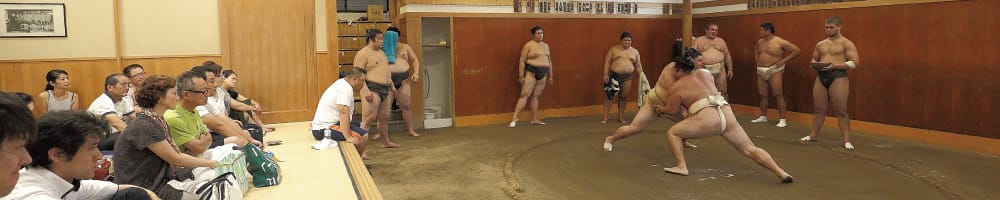
Practice at Tokitsukaze Stable
Important Notes:
Sumo practice takes place in a tense and silent atmosphere. There's no room for talking or smiling; it's always conducted in a serious and focused manner. As a visitor, you must show respect and observe proper etiquette.
No talking allowed.
Flash photography is prohibited.
Eating and drinking are not allowed.
Do not wear shoes inside.
Set your mobile phone to silent mode.
Avoid any actions that may disrupt practice.
These are the minimum etiquettes you must strictly follow. Once you start watching, it's customary to stay until the end. Since sitting for an extended period can be tiring, consider managing your time wisely. The closing ceremony is unique to sumo and reflects the sport's ritualistic nature, making it worth witnessing to the end.

Reply