- Rice Fish Miso Soup
- Posts
- Don Quijote: Exploring Japan's 'The Other Side' of Retail Design
Don Quijote: Exploring Japan's 'The Other Side' of Retail Design
From Chaos to Success – How an Overwhelming Shopping Experience Redefines Modern Retail

Shu T
September 13, 2023
What comes to your mind when you think of Japanese design?
Many might envision a design characterized by rationality, tranquility, and ample space, exemplified by brands like MUJI.
However, this is merely the surface.
It's an illusion to think that a society that experienced rapid economic growth is inherently rational and ascetic, akin to Zen monks. Behind the organized facade, there lies a sea of chaos teeming with emotions and desires.
In this article, I'd like to introduce Japan's "the other side" of modern design, a concept often overshadowed.
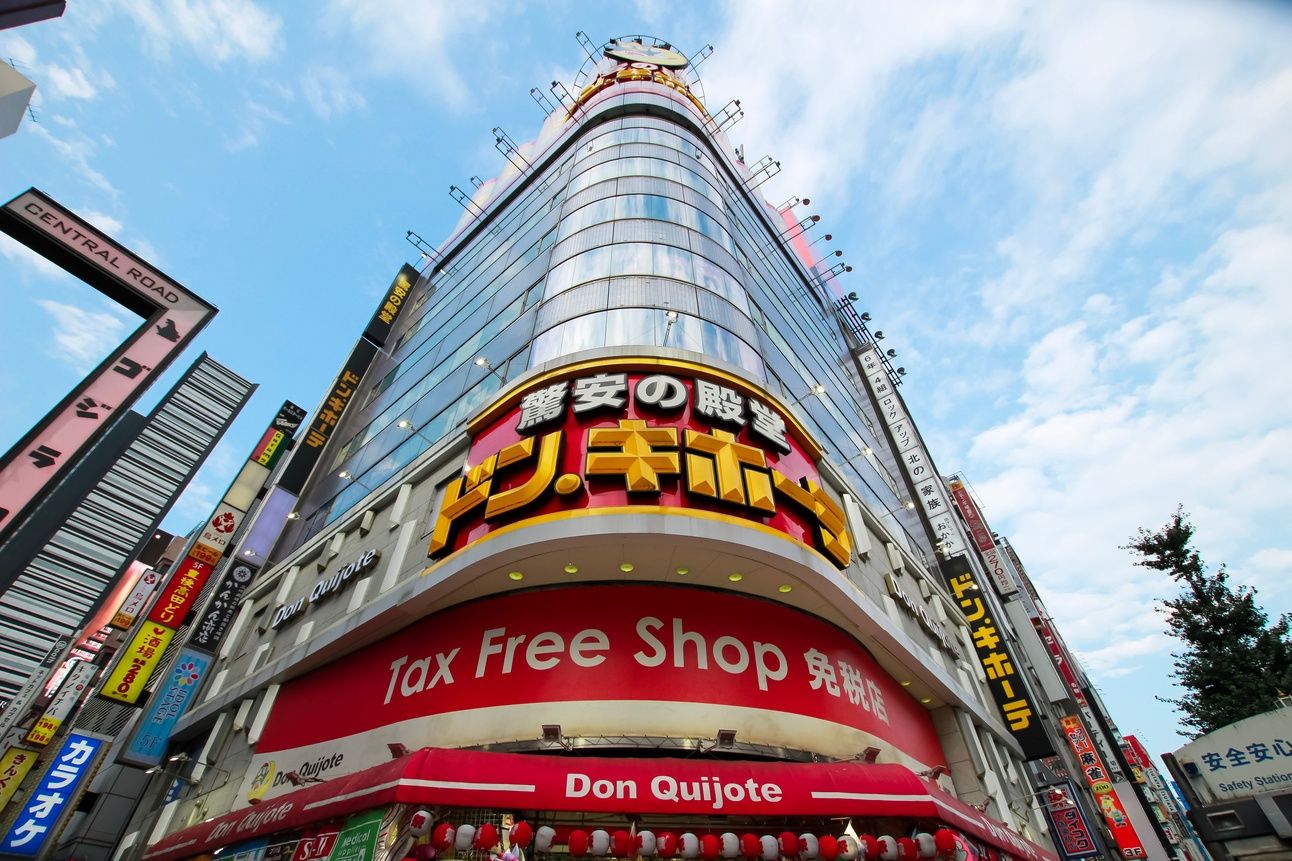
Meet Don Quijote, the retail giant currently stealing the spotlight in Japan.
They achieved 33 consecutive periods of revenue and profit growth by the end of June 2023, with consolidated sales of approximately 1.9 trillion yen.
Despite deflation, the pandemic, and declining population, they continue their triumphant journey, absorbing all kinds of demand, from night markets to inbound tourists.

The interior of their stores is a far cry from sophistication or minimalism. An overload of information. Non-modern design that might leave Le Corbusier in awe.
However, this seemingly chaotic space is incredibly rational in its own way.
Don Quijote has always been a popular spot for tourists, but visiting with a learning perspective can be even more rewarding. Despite appearances, this space, which may seem chaotic, is profoundly rational.
Let's delve into the effectiveness of this chaotic design and the background behind its creation.

Don Quijote's most distinctive feature is its "compressed shelving," where products are stacked almost to the ceiling without the need for a traditional backroom.
Additionally, the store is flooded with promotional materials, some of which have product names exceeding 300 characters.

It can be a challenge for even Japanese shoppers to find what they need, but as they categorize themselves as a "time-consuming retail business," their aim isn't just to get customers in and out with the minimal necessary items.
Here, shopping is pursued as a form of entertainment where discovery is celebrated.
This attempt to redefine shopping as an entertainment experience has been remarkably successful, as indicated by their growth.
While Bauhaus preached "Form follows function," this design emerged out of necessity.
The founder, starting with nothing, had no room for a backroom, so he stacked all the stock inside the store. To make these piles of stock visually manageable, promotional materials were posted everywhere.

“Thief Market” - ex Don Quijote
This inadvertently piqued the curiosity of customers, resulting in a more enjoyable shopping experience.
In balancing business-side rationality with customer benefits, this design achieves a functional beauty that's theoretically fascinating.
——But why does this type of chaos appeal to people?
Its roots likely trace back to street markets.
If you've ever traveled in Southeast Asia, you've experienced it: the constant throng of people, the cacophony of cars and motorcycles from all directions, the aroma of street food, the voices of hawkers, and the approachable warmth of it all.

It's a stark contrast to sophistication, offering a friendly, familiar touch. It numbs rational thinking and stimulates adventure and emotions, like a primitive thrill.
Don Quijote's space effectively recreates this atmosphere.
It's essentially a modern street market.

Their choice of location, Kabukicho, Tokyo's largest entertainment district, isn't coincidental.
Late at night, a vast, brilliantly lit space appears before intoxicated patrons. Once inside, they're greeted by a deluge of products and promotional materials. The abundance of stimuli intoxicates the customer's mind. It takes them to a more physical, sensory, animalistic state, where rational thought is absent, and shopping carts are filled with desire.

This type of design is an area that hasn't received much systematic study due to its apparent cheapness.
However, I believe it holds significant significance. Design reviews are conducted with a sober mind, but the moment the shopping switch is flipped, consumers transform into irrational creatures.
Businesspeople struggling with retail growth should find valuable insights by visiting Don Quijote.
Nevertheless, it's important to note that mere surface imitation doesn't guarantee success.
Stores like Korea's "Piero Shopping" and China's "BOOM BOOM MART," which mimicked Don Quijote's design, failed and closed quickly.
Space design is just one part of Don Quijote's strengths, with the growth being reinforced by sourcing strategies and the strength of the business structure itself.
Reply